A draft of the first 8 minutes of our upcoming documentary. Stay tuned for the full video soon.
Preview: Development in Bad Waters
Reply

A draft of the first 8 minutes of our upcoming documentary. Stay tuned for the full video soon.
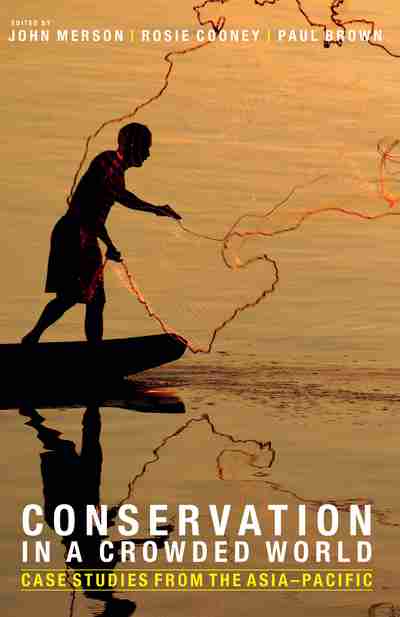 In Bangladesh, polluted and irregular surface water resources prompted a national shift to groundwater for both agricultural and household use in the 1960s and 1980s, respectively. About a decade ago, natural occurring arsenic was detected in the shallow groundwater wells, exposing an estimated 20-60 million people, and putting food security at risk. For over half a century, policy-makers have debated the measures to water management and conflicting access issues. Arsenic contamination and climate change now add new uncertainties that complicate a discussion on sustainable use of water resources. Moreover, this debate takes place at the (inter)national level with little involvement of local communities and with meagre results and inequitable implementation. This paper presents a systemic overview of the uncertainties and inequalities in distribution of resources and ecosystem services. It then reviews some of the outcomes of an adaptive management programme undertaken by the Arsenic Mitigation and Research Foundation over the past four years. The findings are framed by the concept of Conservation and Sustainable Use, particularly by the Addis Ababa Principles and Guidelines for the Sustainable use of Biodiversity. While these raise valid concerns in relation to equity, they remain to be informed by practical realities on the ground.
 We now have our own Facebook page, please come follow us here.
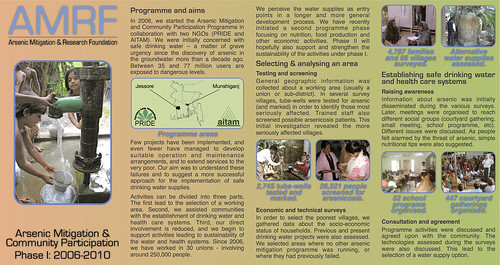
Please click on the image to see the overview (pdf) of the results from phase 1 of our activities.
In 2011, we were granted support from the Japan Government through their Grant Assistance for Grassroots Human Security Projects to establish a community clinic in our working area. The aim will be to strengthen the medical health side of our programme and provide health care services, especially to women and children in the project area. It will be established in Shologhar Village, P.S. Srinagar (Bikrampur) District – Munshiganj, Bangladesh.
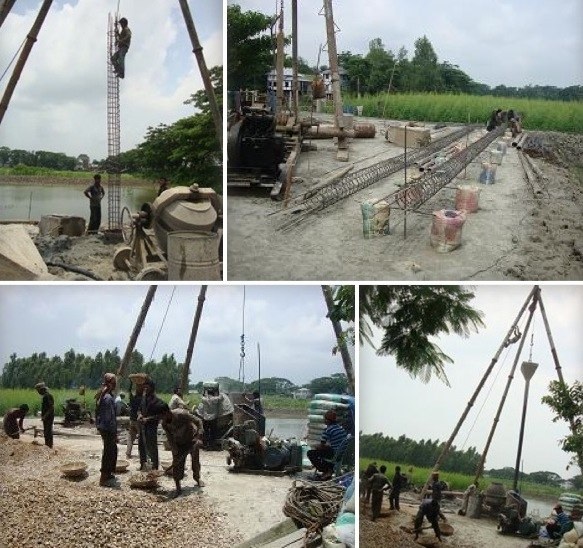
 Published in New Matilda, by J. Arvanitakis: For an Australian, it is difficult to describe the sense of spending a few days in a Bangladeshi village. You simply give up avoiding clichés: the colours and the smells, the friendliness of the people, the poverty, the amazing food, the call to prayers… Please read full article here.
 From 9-19 October 2012, two international workshops were hosted by the Arsenic Mitigation and Research Foundation (AMRF) in Dhaka and Munshiganj district. These were funded by the University of New South Wales (UNSW) International Research Collaboration Scheme and organised by the UNSW Institute of Environmental Studies (IES), the UNSW School of Humanities in collaboration with: Burdwan University, University of Hyderabad, University of Western Sydney, University of Kerala, Mumbai Centre for Technology Alternatives for Rural Areas. For more information see our workshop plan, photos and the IES Newsletter. The arsenic mitigation workshop was a follow up of a previous research visit to arsenic affected communities in India.
 We are happy to announce that the Manusher Jonno Foundation (MJF) will be providing capacity development support to AMRF (2012-2013). MJF is an initiative designed to promote ‘human rights’ and ‘good governance’ in Bangladesh. MJF will provide training on different issues to develop our organisational strength. We hope that this will lead to a longer term partnership.
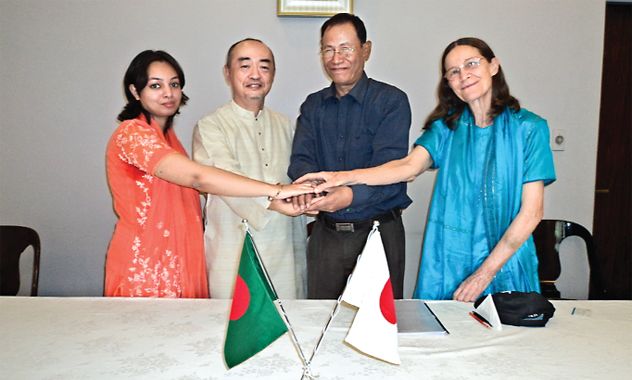
From a Daily Sun news report: “Japan has decided to provide grant assistance of US$ 628,390 (approximately Tk 5 crore) to Bangladesh for seven projects under Grant Assistance for Grass-roots Human Security Projects (GGHSP). A contract-signing ceremony was held in this regard on Wednesday in the Japan Embassy where representatives of three projects out of seven namely Trust for Rehabilitation of Paralysed (TRP), Arsenic Mitigation and Research Foundation (AMRF) and Unitarian Service for Development and Peace (USDP) were present, says a press release.”
 Millions of drinking water supplies in Bangladesh are contaminated with potentially lethal levels of arsenic. This discovery in the late 1990s sparked widespread international concerns and generated a substantial amount of funds. Yet, after more than a decade, the provision of safe water supplies and accessible arsenicosis treatment schemes remains inadequate. A lack of understanding of the origin and health impacts of arsenic is one of the many obstacles at the community level. There is evidence that arsenic poisoning affects particularly the poor due to their malnutrition and low health status. Moreover, technologies and medicines for treatment are often unaffordable or unavailable to them. Interventions in the water and health sectors must not only address these inequalities, they must also be integrated. It has long been established that treatment is of no use unless people first have access to safe water. The reverse is also true; shifting to safe water is often not sufficient to detoxify the blood and organs affected by years of gradual poisoning. A safe water supply must go hand in hand with long-term medical support for existing patients. This raises serious doubts about the sustainability of many of today’s efforts. Our paper describes the challenges by drawing from our experiences working with some of the poorer arsenic affected villages in rural Bangladesh.
